one neighbourhood, three years, a question that keeps growing
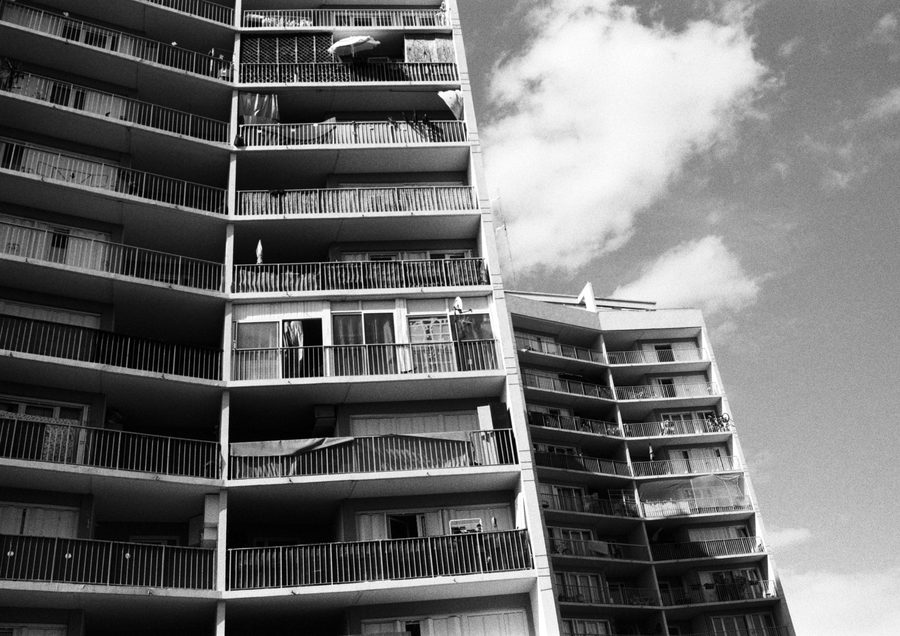
L’Almont is the largest neighbourhood of Melun, a quarter of an hour from the town centre. Blocks and towers built in the early 1970s, a shopping centre, primary and secondary schools, parks, a river, sports halls, and La Boussole, a community centre and public library. This is how the participants of the first workshops described their neighbourhood in 2024 — “we wanted to show that l’Almont is life, and not just the towers”.
Mon œil sur terre (mOst) has been working in l’Almont since 2024 with La Boussole. The first project, a “Point de vue” (point of view), let residents tell the story of the neighbourhood with their maps, photographs and sounds. The second focused on one precise place, the Trois Tours esplanade, and on its future: “Imagine ton quartier” (imagine your neighbourhood), presented to the public as “Dalle, mon futur” (esplanade, my future). The third, under way in 2026, widens the perimeter, documents the first transformations and prepares what comes next.
This site gathers what has been produced, year after year, and will grow with each volume. The photographs, maps, drawings and words are the residents’ own. Nothing has been written in their place.
three years, three questions
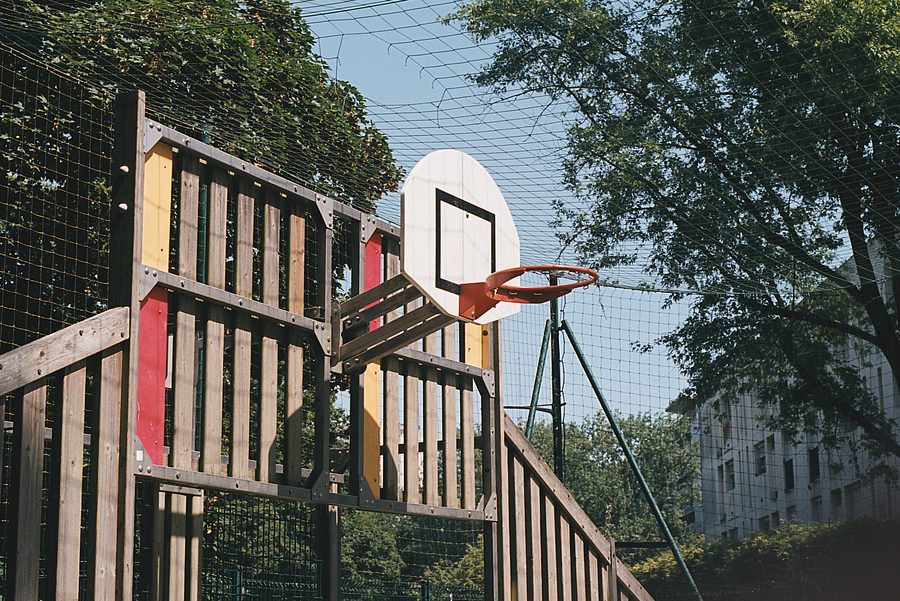
Observation, stories, film photography, sound, subjective mapping. Eleven workshops with La Boussole and an exhibition on its premises.
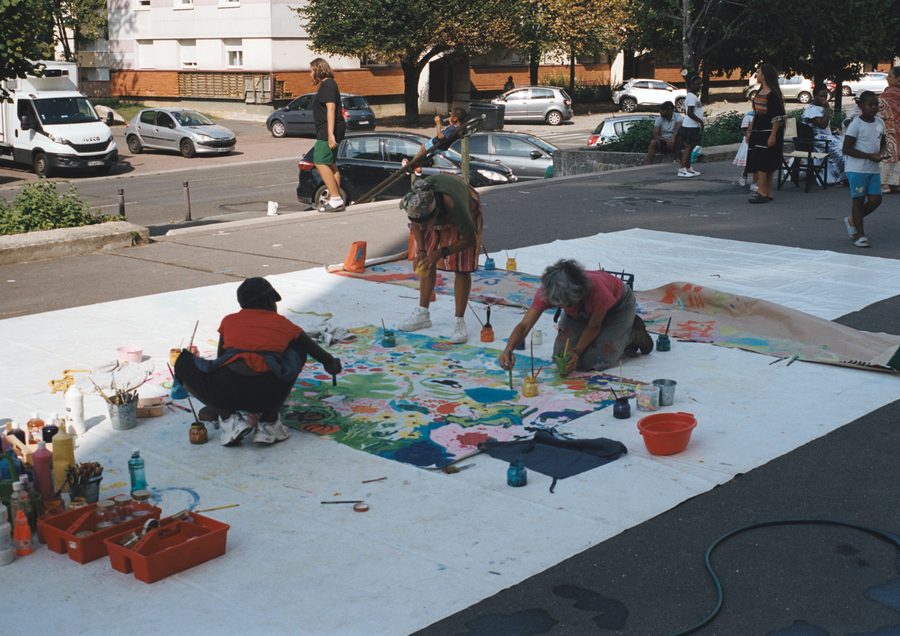
From storytelling to consultation: maps of the future, drawings on photographs, street interviews, first interim installations with Au Milieu and Gygo, an exhibition on the esplanade and at La Boussole.
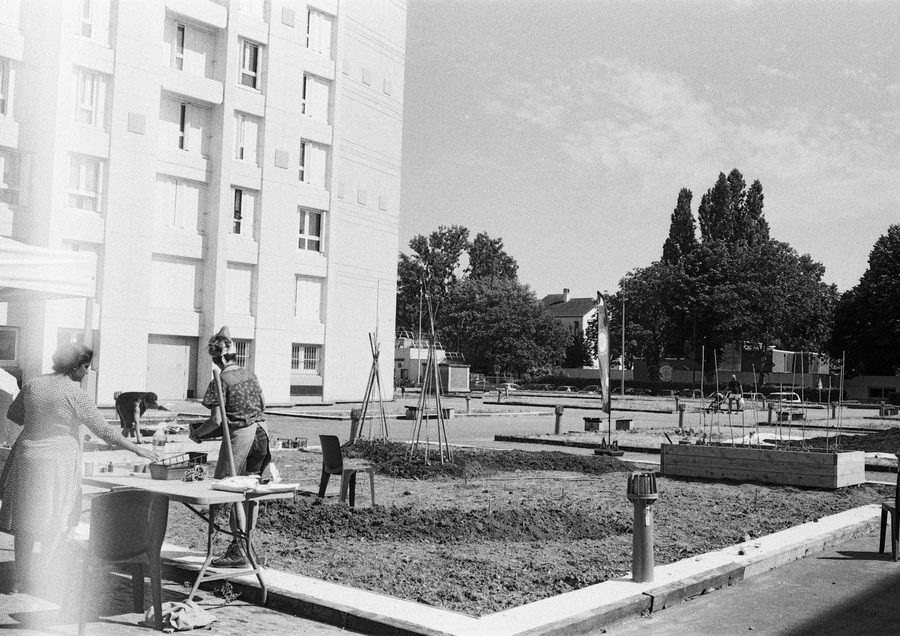
Operational mapping, neighbourhood memory, a film, fifteen proposals handed to the people shaping the space — and the groundwork for a phase 3.
the trois tours esplanade
At the foot of the three towers, the esplanade is a space everyone crosses and few people occupy. In 2024 the participants already spoke of it with nostalgia — the old “café city”, children on scooters at the foot of the towers — and in terms of what was missing: places to meet, play, sit down, find some shade.
When the question of redeveloping it came up, it was natural to start from there. Not to ask residents to approve a plan, but to build with them the images, maps and words from which to decide.
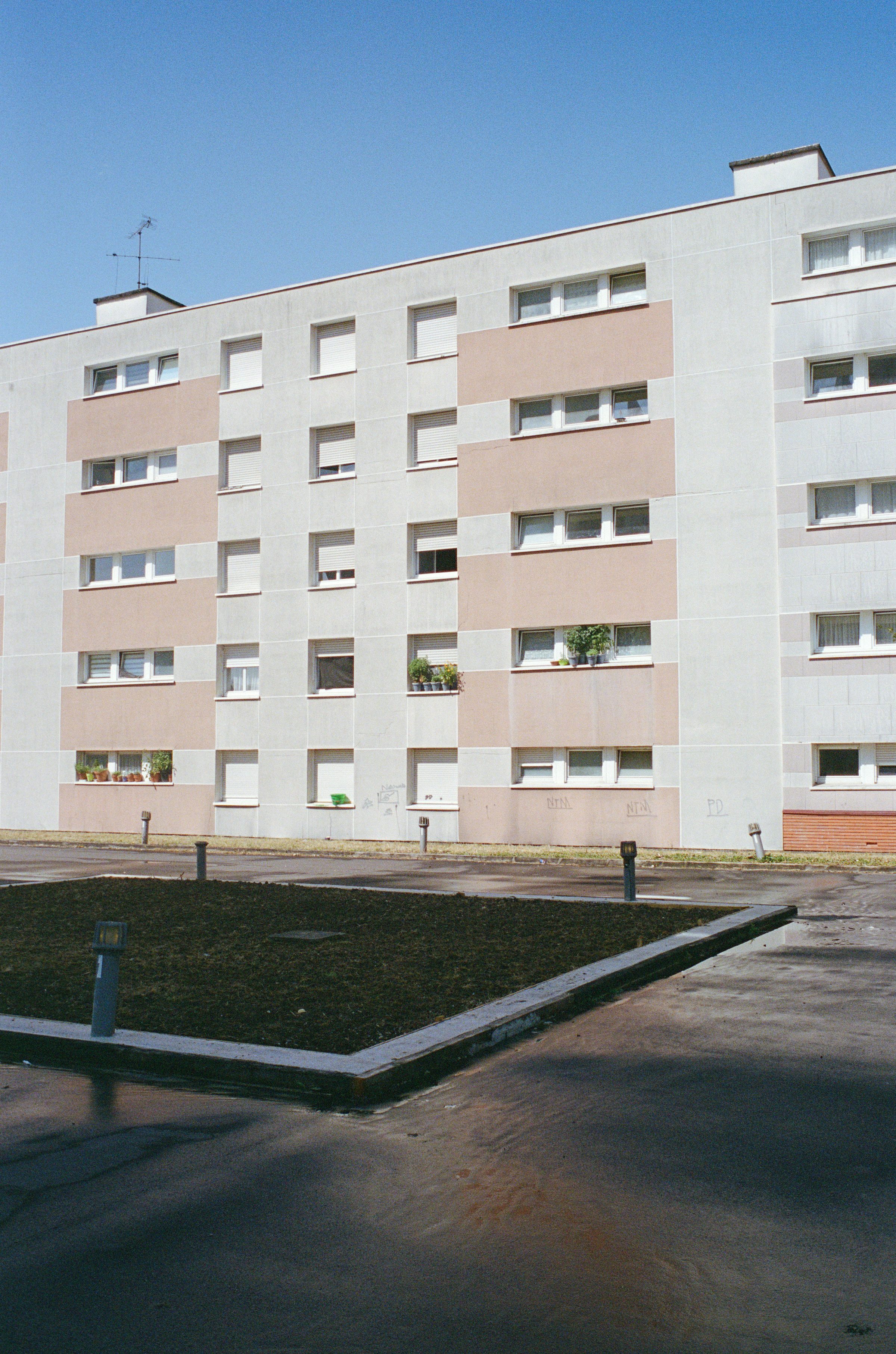
the Trois Tours esplanade, summer 2025, before the first installations
four partners, four roles

La Boussole
The anchor. La Boussole knows the residents, brings people together, hosts the workshops and keeps the project alive between two periods of fieldwork.

mOst
The artistic, documentary and educational tools: photography, sound, video, mapping, writing, drawing, exhibition. And the work of turning the words and materials produced into objects that can be seen, debated and passed on.

Au Milieu
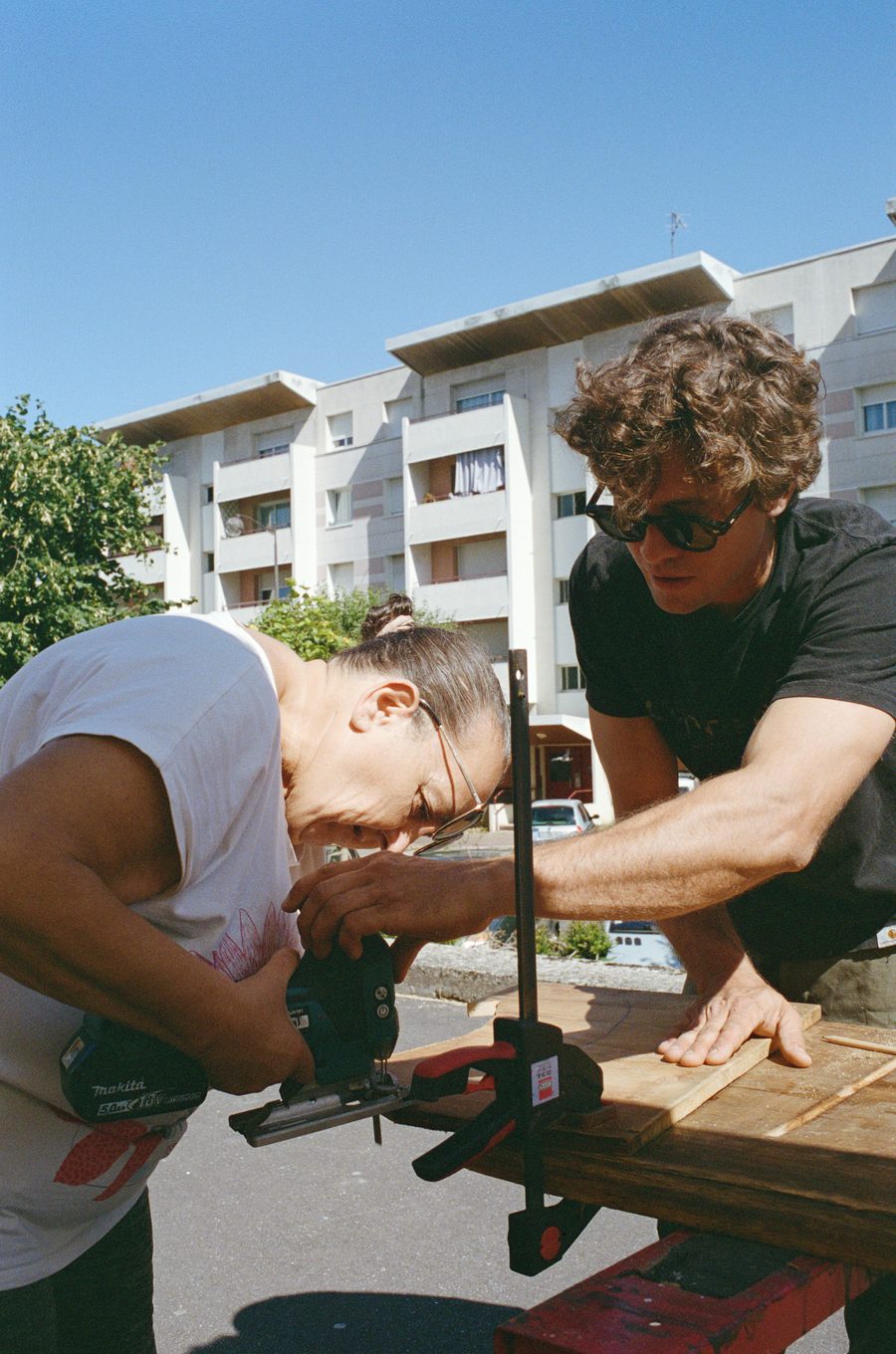
The interface between the ideas voiced in the workshops and interim installations: furniture, tables, signage, first uses tested on the esplanade.

Gygo
The plots and shared vegetable gardens. Gygo draws on the residents’ maps and projections to decide where to plant, and runs the creative sessions around the gardens.
An arts organisation stands in for neither the residents nor the planners: it makes the tools that allow residents’ experiences to become visible, debatable and, sometimes, operational.
a method that widens every year
Duration is part of the artistic project itself. A participant can look at a space, imagine its transformation, see a few months later what has been built, then return to the project to think about the next step.
from words to decisions
The risk in any consultation is that the words collected end up endorsing choices already made. In l’Almont, the aim is to be able to follow each proposal from the moment it is voiced to what it becomes:
- a resident’s words or proposal
- a map, a drawing, an interview
- a handover to the partners
- a decision
- a realisation, an adaptation or an impossibility
- an explanation to the residents
From 2025, the workshop maps and projections were used by Gygo to lay out the vegetable gardens and by Au Milieu for the interim installations. In 2026, fifteen drawn or photomontaged proposals were transcribed for La Boussole, Gygo and Au Milieu.
six ways into the neighbourhood
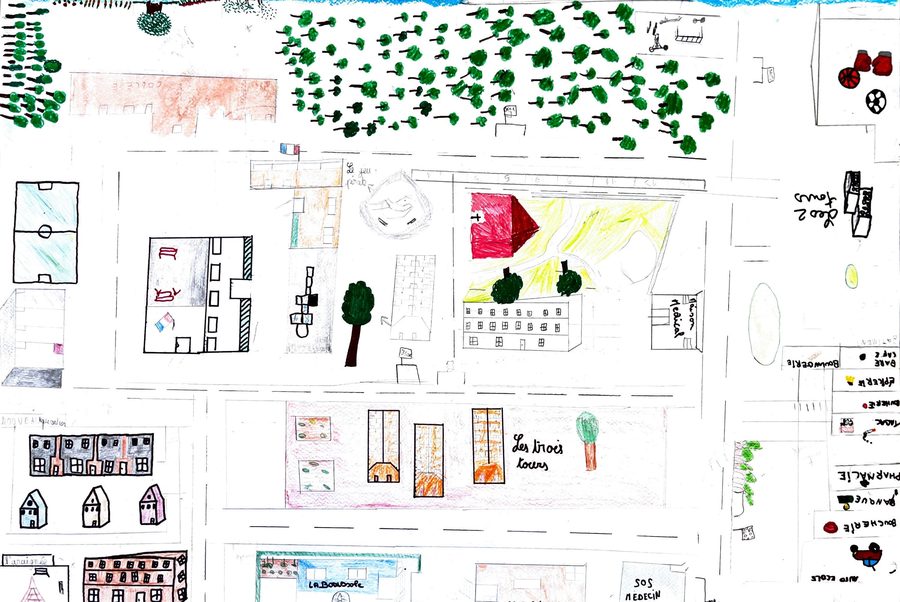
subjective mapping
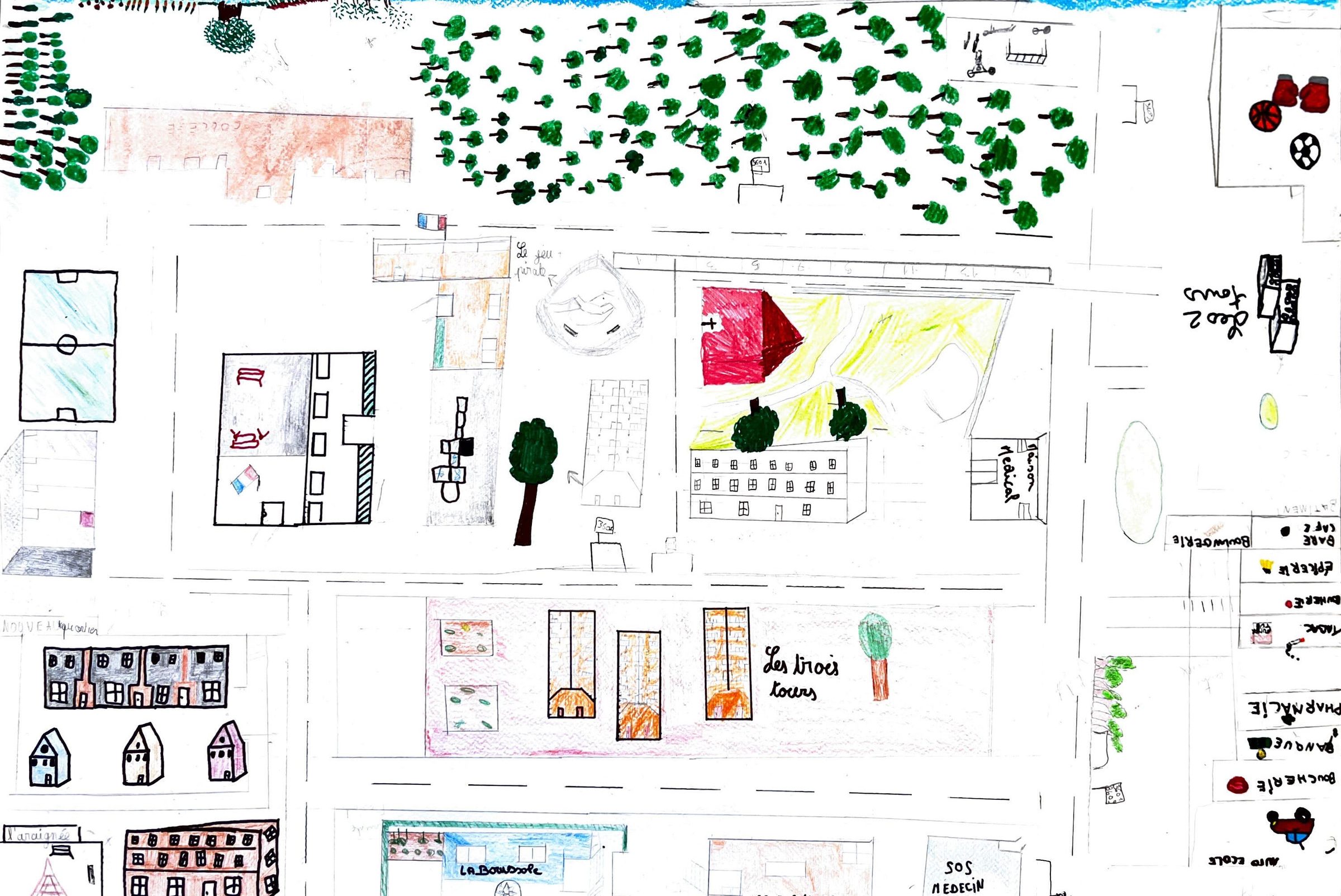
Everyone draws their own map of l’Almont: important places, routes, memories, loved or difficult spaces. The individual maps are discussed until a collective map emerges — less a tool for finding one’s way than a support for debating what makes the neighbourhood, and then what people want to see appear in it.
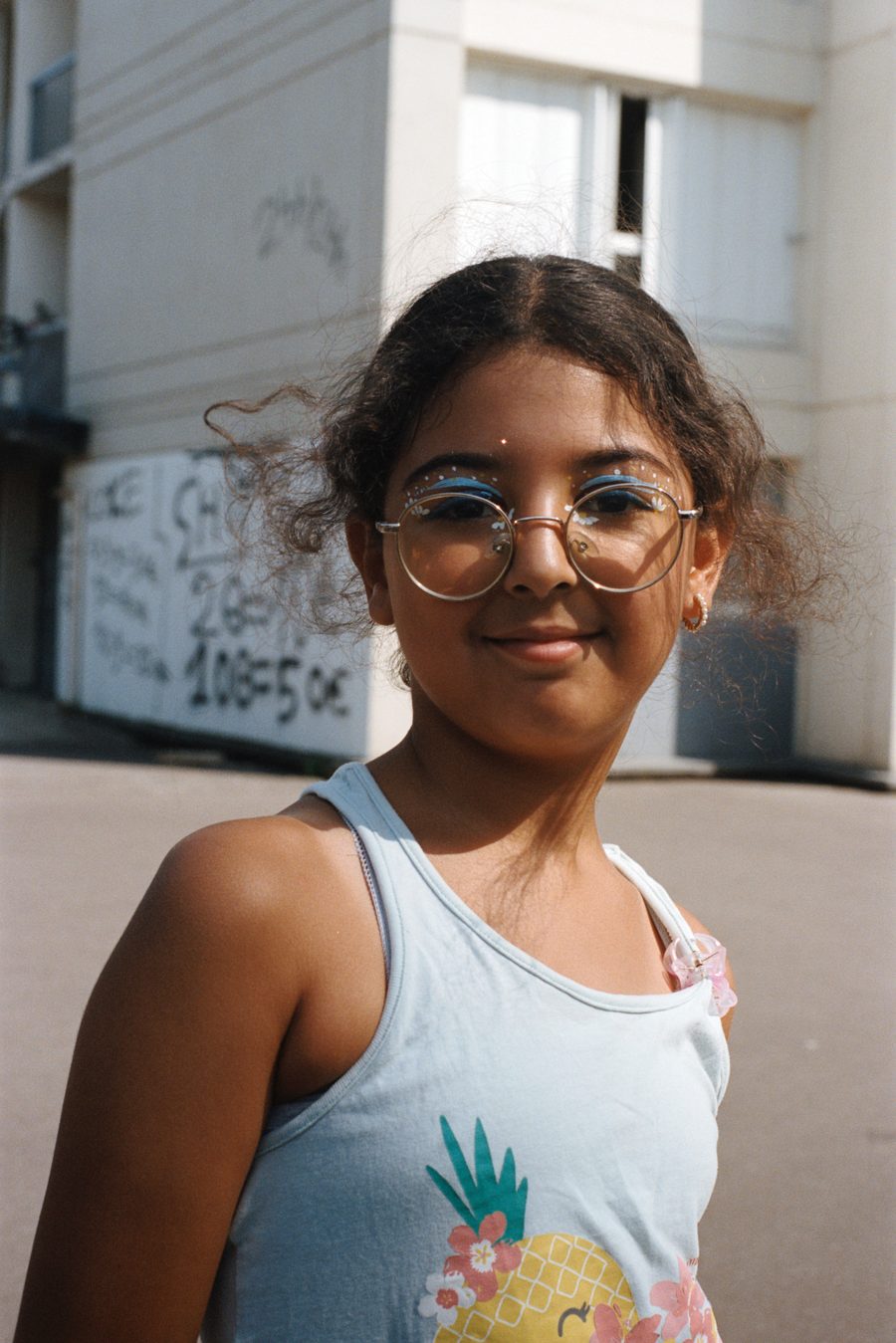
photography
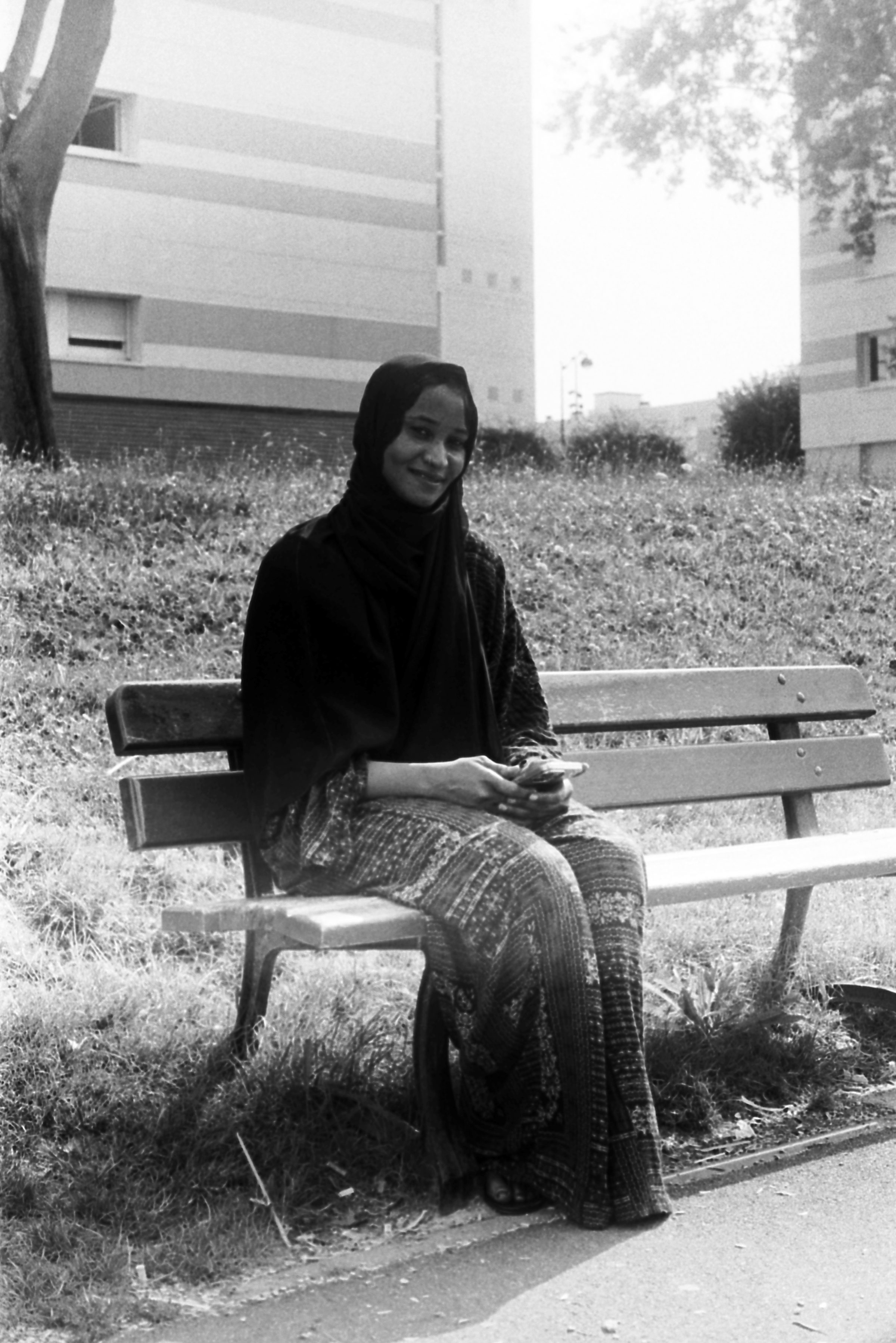
Framing, point of view, shot sizes, composition. Part of the work is done on film: the limited number of frames forces you to slow down and decide what deserves to be photographed. The walks through the neighbourhood are built from the collective map.
sound
An introduction to recording and interviewing, writing the questionnaires, street interviews with residents of different generations. The words collected widen the story beyond the workshop group and, in 2025, become a genuine tool for consultation.
video
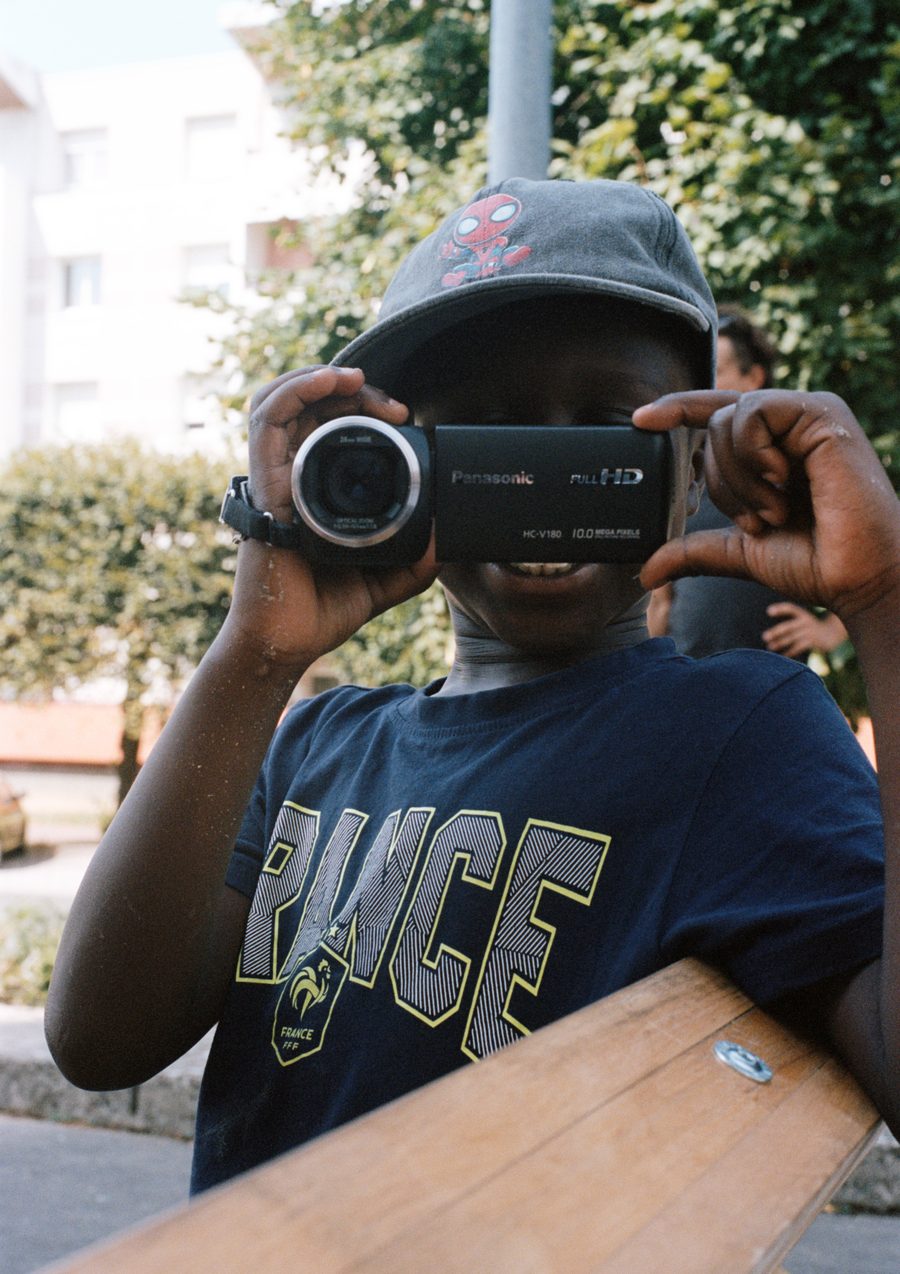
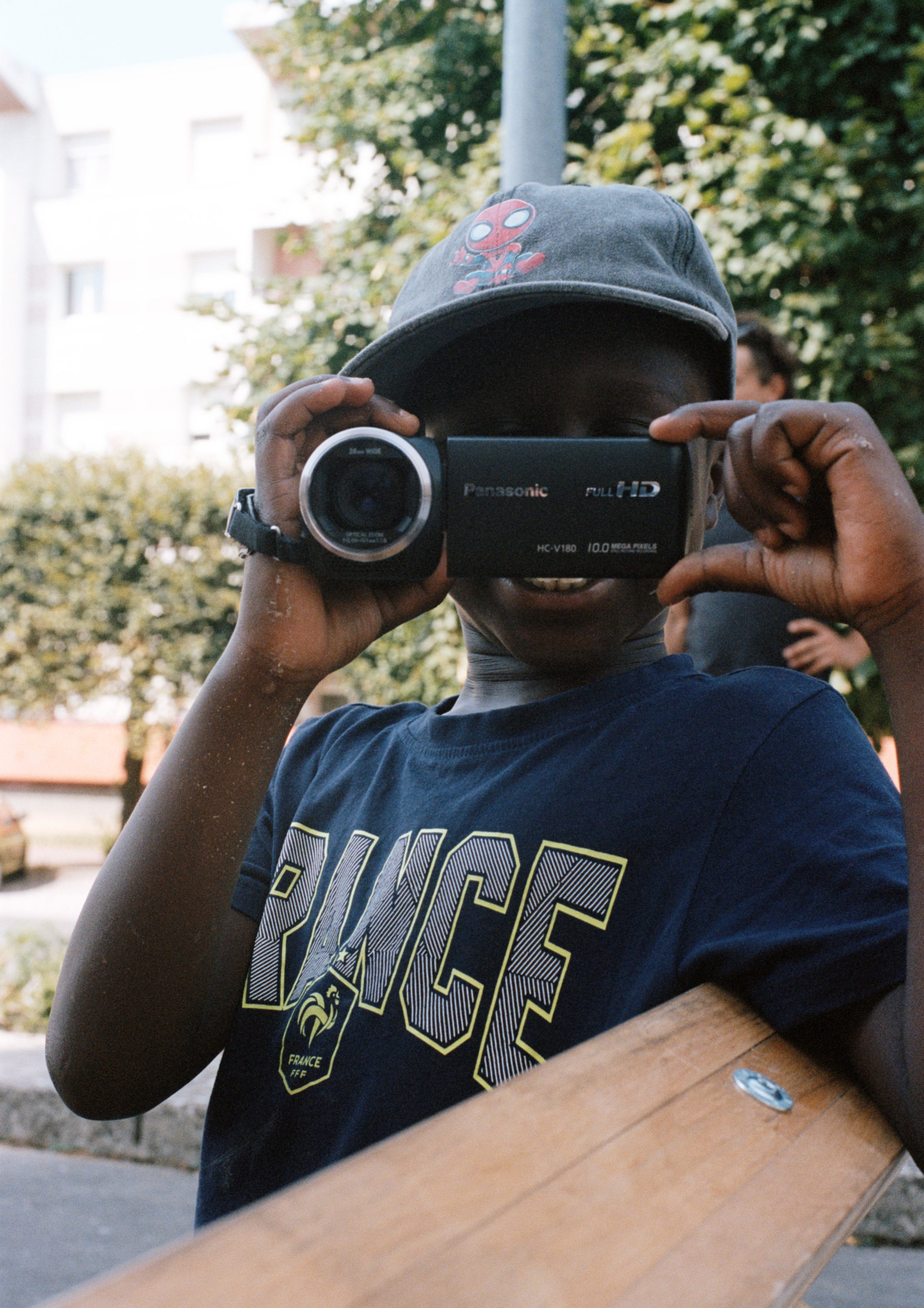
The interviews are listened to in order to imagine the images that might answer them. Digital and Super 8 footage from 2025; in 2026, a film in three tenses — the history of the neighbourhood, the present situation, the imagined futures — with filmmakers trained at the Ateliers Varan.
drawing on photographs
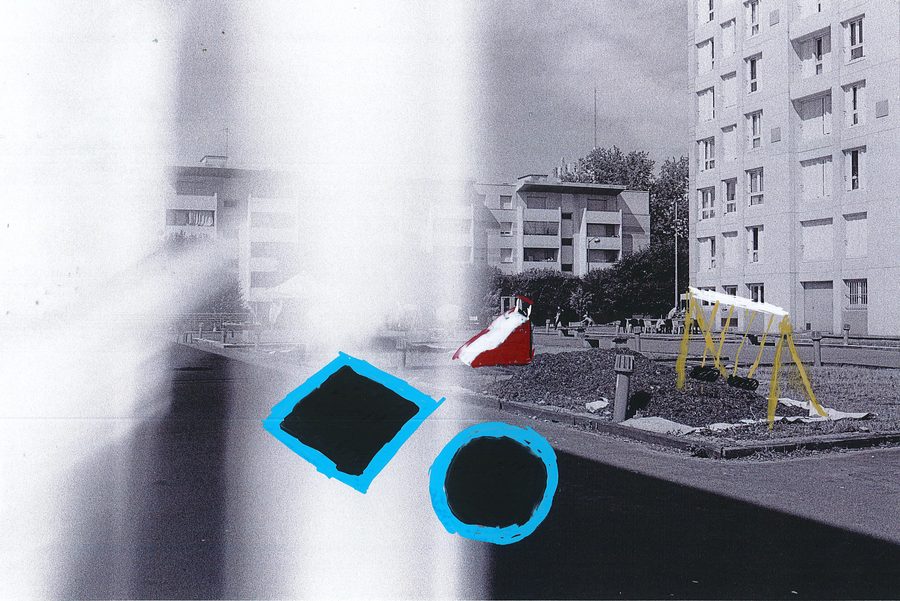
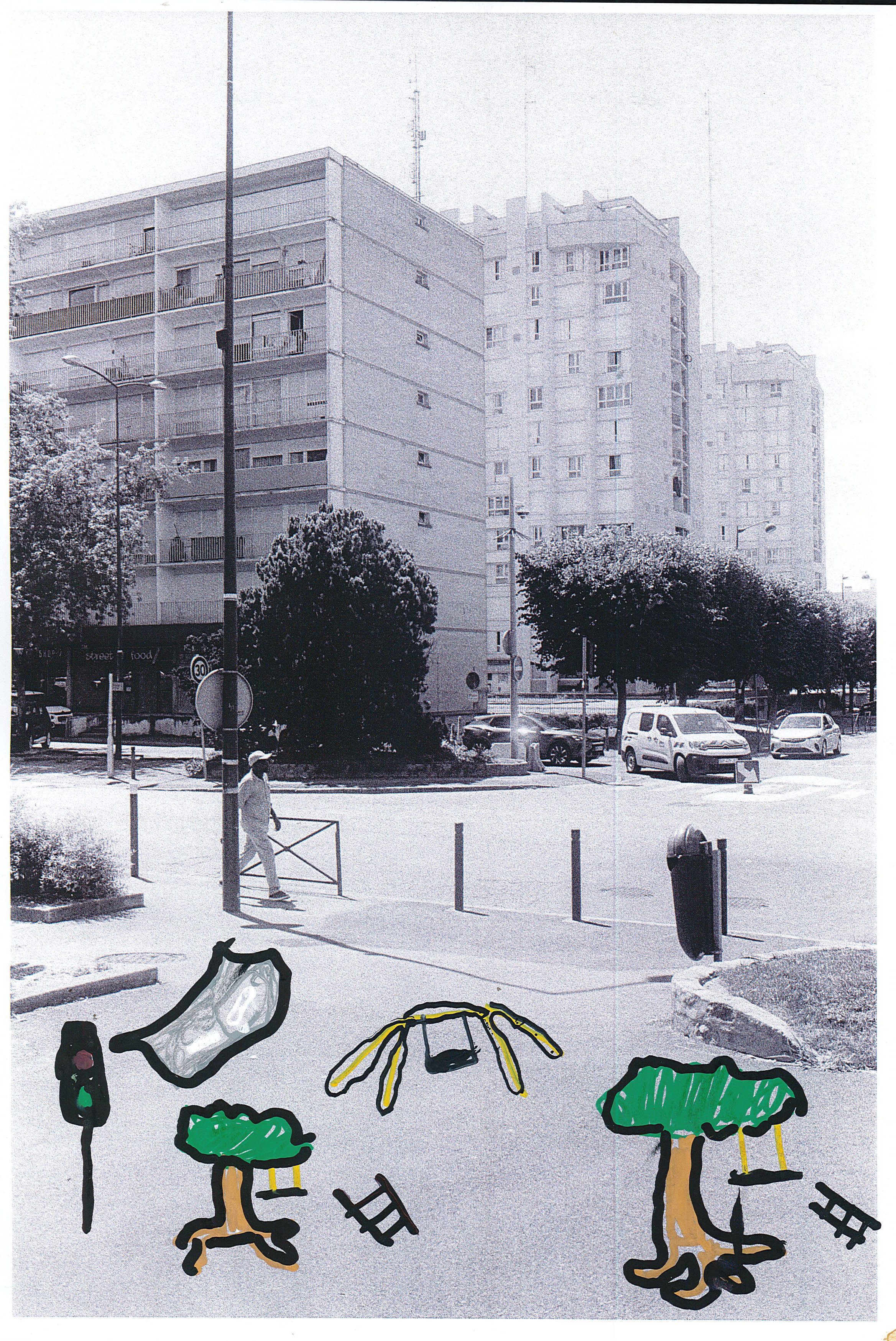
Drawing directly onto photographs of the esplanade to make visible the facilities, uses and spaces that do not exist yet: a swing, a fountain, a snack bar, a corner for the elderly.
the exhibition
The public presentation is not a closing event: it is part of the method. At La Boussole and directly on the esplanade, the photographs, maps, testimonies and drawings publicly show what was discussed. Residents can see, complete or challenge the proposals.
exhibiting where people live
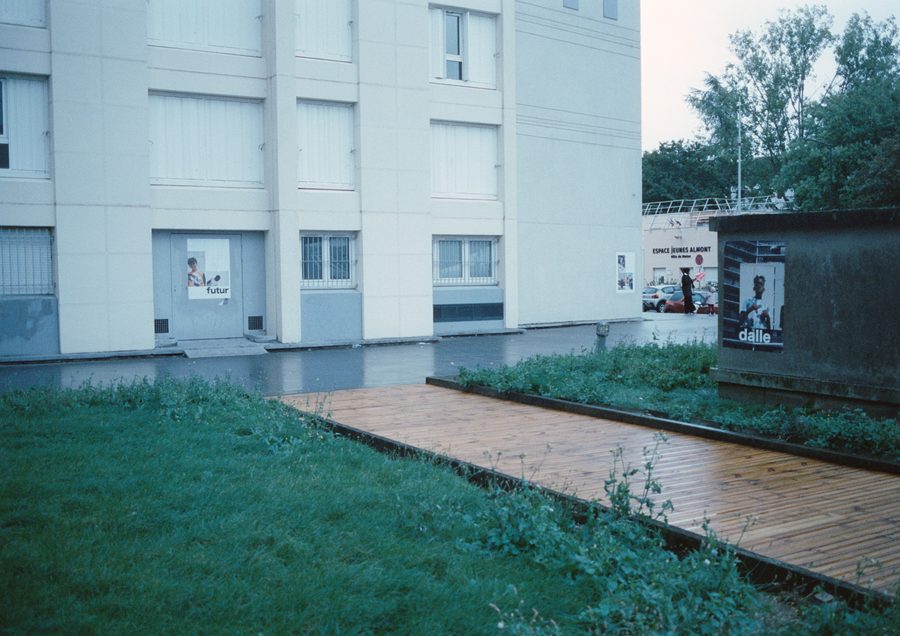
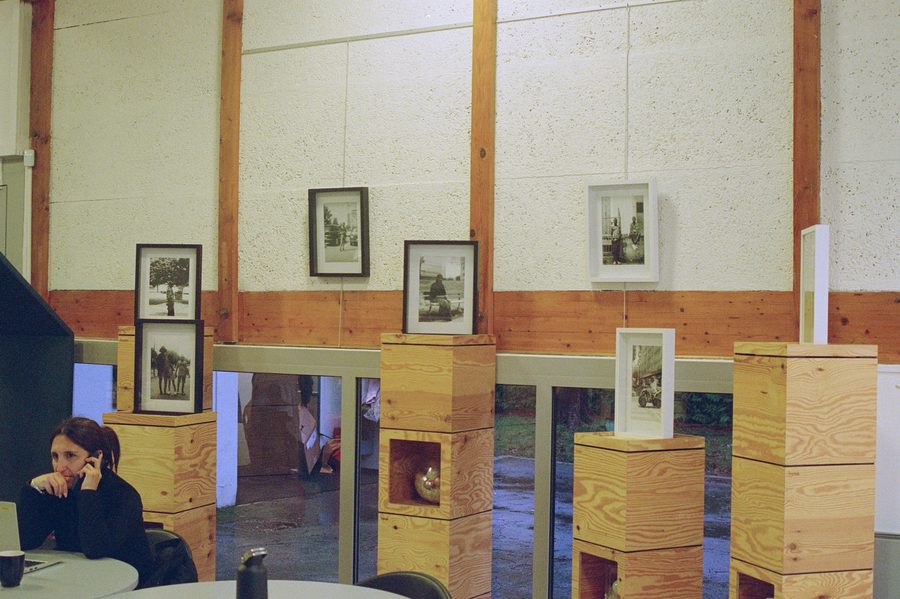
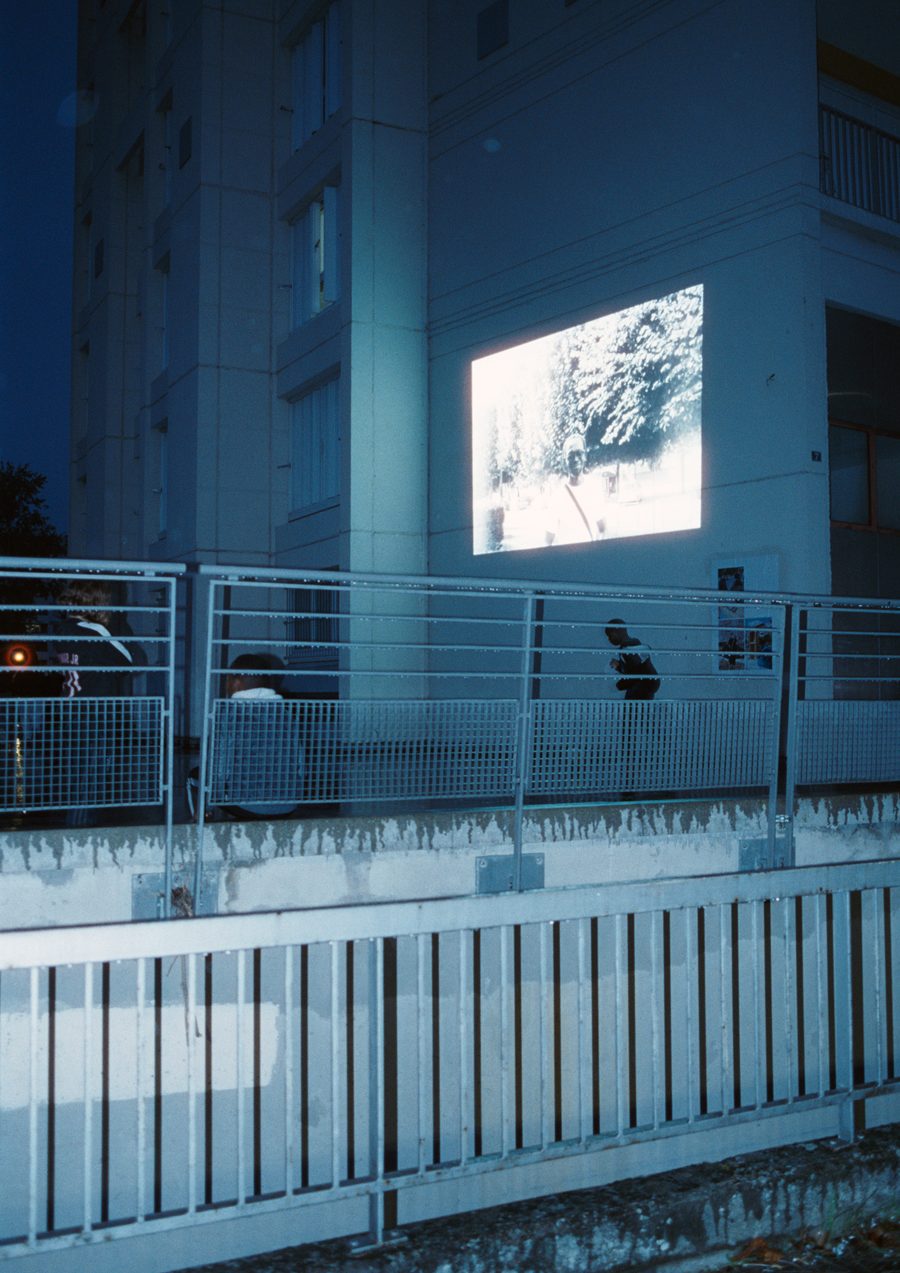
At mOst, the public presentation is part of the method. In l’Almont it took two forms: an exhibition at La Boussole in January 2025, inside the community centre and library; then, in September 2025, an exhibition on the esplanade itself — posters pasted on the walls of the passageways, portraits projected at night onto the façades, panels hung at La Boussole.
what l’almont says
We wanted to show that l’Almont is life, and not just the towers.the participants, 2024
Before, there was the café city, and we went there for coffee; the kids played and ate. This place makes me nostalgic.les trois vieilles tours, 2024
I like it when curious faces appear behind the windows, and even more when people end up coming down to join us.vitrines, 2024
In the future I would like there to be swings, slides and trampolines like in the picture.l’almont dans le futur, 2025
We also need corners for older people, like a space for playing pétanque.2025
I really want a beautiful neighbourhood, and for it to grow because it is very small. I want my neighbourhood to get better in 2026.almont en pause, 2025
Our park would be the most famous in France.le plus grand quartier au monde, 2025
Come back next year!yanis, 2025
listen to l’almont
The sound pieces made during the workshops: street interviews, the sounds of the neighbourhood, conversations with residents of different generations.
a living archive of l’almont
Film and digital photographs, portraits, subjective maps of the present and the future, collective maps, drawings on photographs, street interviews, long interviews, first video and Super 8 footage, scans of the proposals, transcripts, exhibition panels: taken together, these materials are gradually forming an archive of the transformations of l’Almont seen from the people who live there.
This archive is meant to remain accessible in the neighbourhood. That is the point of this site, and of the phase to come.
and then?
The presentation of volume 2 opens onto a third phase: continuing the concrete experimentation with the uses and facilities drawn from the maps, finishing the film by weaving together archives, residents’ memories, the building work and everyday life, and organising the handover of the whole body of work produced since 2024. The central question then changes: “What has become of what we imagined, and how do we want to go on living in l’Almont?”
what has become of what we imagined, and how do we want to go on living in l’almont?